Your nervous system runs the whole show. Here's how it gets stuck — and how we get it back.
No jargon, no mysticism. Just the machinery: the gas, the brake, and the three things that push on both.
Every nervous system has a gas pedal and a brake.
The gas is your sympathetic system — fight-or-flight. It floods you with adrenaline and cortisol to meet a threat: heart up, muscles loaded, focus narrow. Brilliant in a sprint.
The brake is your vagus nerve — the main wire of your rest-and-recover system. Its whole job is to bring you back down after the threat passes. How strong that brake is, moment to moment, is called vagal tone — and it can be measured.
A healthy nervous system isn't one that never revs. It's one that revs, then comes back down. Flexibility is the whole game.
Stress isn't the problem. Not coming back down is.
Run the stress program once and recover, and you're fine — that's what it's for. Run it all day, for years, and the system stops returning to baseline. It gets stuck — in one of two opposite directions.
Hyperactive
The gas is jammed down. Wired, anxious, "tired but wired," racing mind, shallow sleep, braced. The system can't stand down.
Hypoactive
After enough unrelenting load, some systems crash the other way and power down to protect you. Flat, foggy, numb, heavy, checked out.
Same root problem: a system that lost its flexibility. And the fix for one is the opposite of the fix for the other — which is exactly why the generic advice fails. Tell a wired system to slow down and it helps; tell a shut-down system the same thing and it sinks deeper.
Thoughts, traumas, and toxins all land on the same wire.
Thoughts
Every worried thought fires the same stress chemistry as a real threat — cortisol up, brake down. Your brain can't tell a tiger from a tax bill; it runs the same program either way.
Traumas
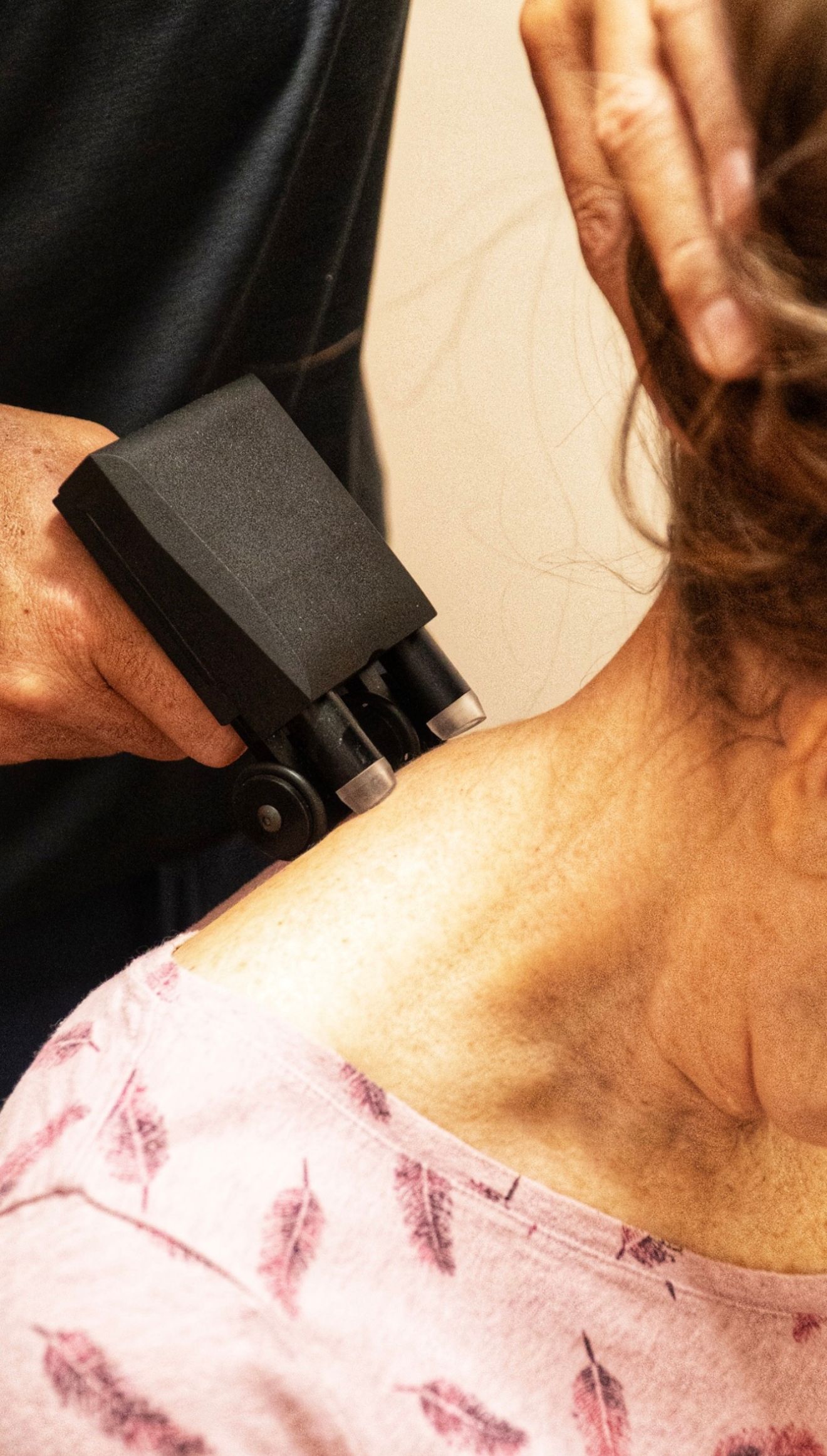
Buried in your muscles, joints, and especially your neck are position sensors that feed straight into the brainstem centers running your heart rate and breathing. How you hold your head and neck is talking to your autonomic system whether you know it or not.
Toxins
Blood sugar swings, inflammation, alcohol, and your gut bugs all tune the vagus directly — a huge share of that nerve's traffic runs from your gut up to your brain.
Three different doors. One nervous system. That's why we map all three — and why naming which one is driving you is the difference between a real protocol and a guess.
The brake leaves a signal. We read it.
Your heart doesn't beat like a metronome. The tiny variation between beats — heart rate variability — is your brake at work. More variation means a flexible, responsive system; a stuck system beats flat and even. It's one of the clearest windows into your nervous system, and you don't need a lab to start watching it.
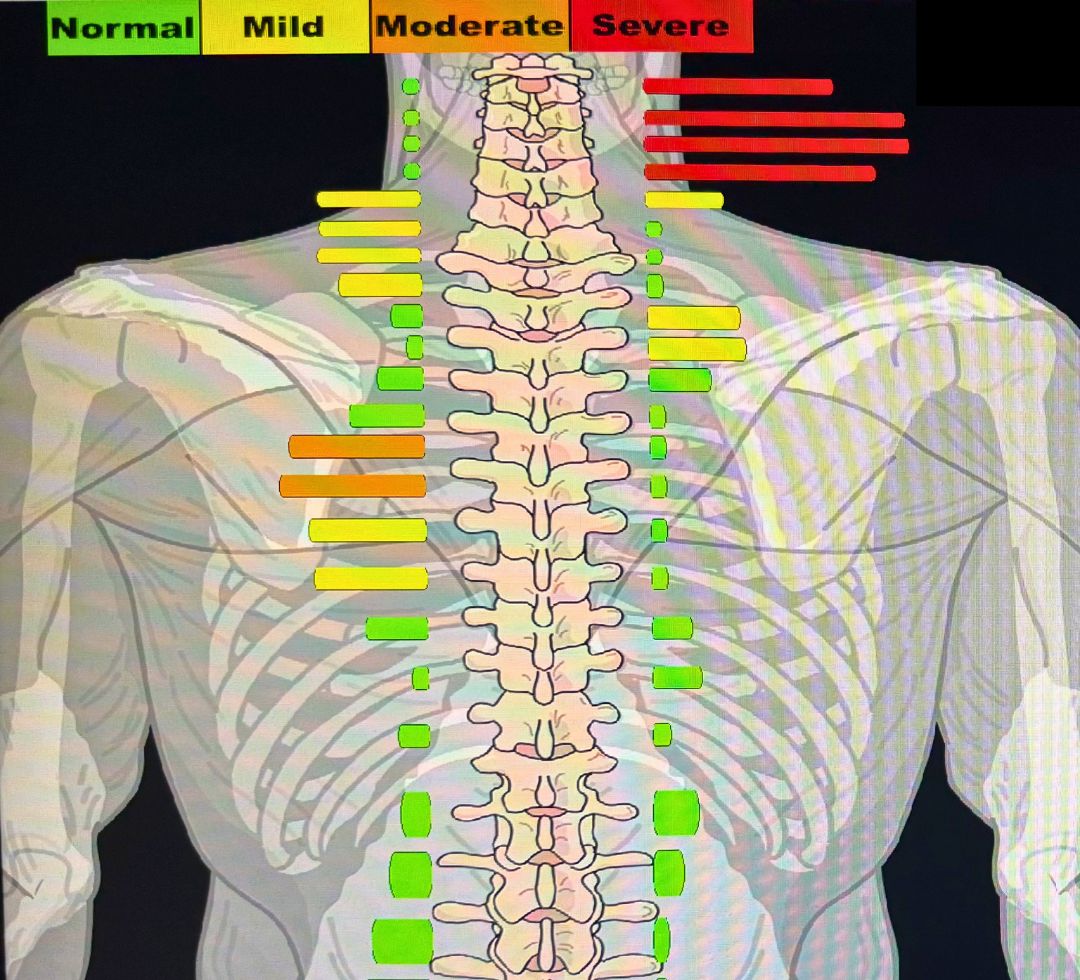
In the clinic we go higher-resolution: computerized infrared thermography reads the autonomic nervous system along your spine, and biomechanical digital X-ray shows the atlas-to-brainstem structure feeding it. Remotely, we read your HRV, your orthostatic numbers, your labs, and your history.
Regulated isn't calm. It's flexible.
The aim was never a stress-free life. It's a nervous system that can take the hit from thoughts, traumas, and toxins — and come back to baseline instead of getting stuck on or stuck off. That flexibility is what we measure, and it's what we build.
Which way is yours stuck right now?
Two minutes to find your type — then the protocol built for it.
Take the Free Quiz